
Garden365
12-61-00 Mono Ammonium Phosphate (MAP) – Water-Soluble Fertilizer 🌿✨
12-61-00 Mono Ammonium Phosphate (MAP) – Water-Soluble Fertilizer 🌿✨
Couldn't load pickup availability
Explore the Benefits of Mono Ammonium Phosphate (MAP)
12-61-00 Mono Ammonium Phosphate (MAP) – Water-Soluble Fertilizer 🌿✨
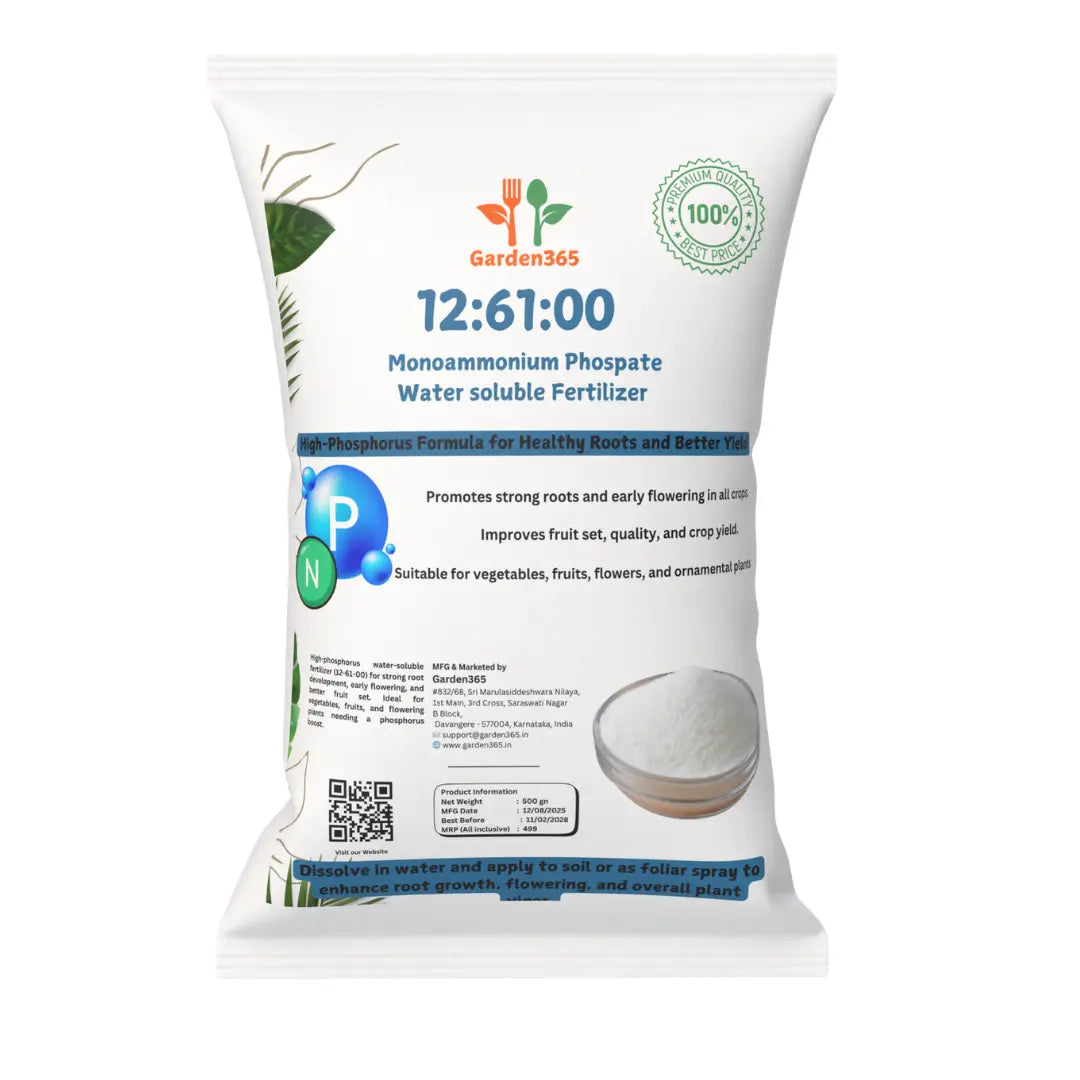
Support early growth, strong roots, and better flowering with 12-61-00 Mono Ammonium Phosphate (MAP) 🌱 – a fully water-soluble fertilizer rich in Phosphorus (61%) and Ammoniacal Nitrogen (12%). Ideal for vegetables, fruits, flowers, hydroponics, and nursery plants, MAP promotes rapid root establishment, enhances flower initiation, and improves crop quality. 🌸🥦🍇🥭
✨ Benefits:
🌱 Stimulates root growth & early plant establishment
🌼 Enhances flowering & fruit setting
🍅 Improves crop yield, size & quality
💧 Fully water-soluble – ensures quick nutrient absorption
🌿 Suitable for foliar spray, soil drenching & drip irrigation
Foliar Spray: Dissolve 5–7 g in 1 liter of water and spray during early growth & pre-flowering stages every 10–15 days.
Soil Application / Drenching: Mix 10–15 g in 1 liter of water and apply to root zone.
Drip Irrigation: Apply 2–3 kg per acre based on crop stage.
Give your plants the power of Phosphorus & Nitrogen with 12-61-00 MAP Fertilizer 🌿💧 – for stronger roots, better flowering, and higher yields! 🌸🥦🍅🍇
What is Mono Ammonium Phosphate?
Mono Ammonium Phosphate (MAP) is a highly soluble fertilizer that provides essential nutrients to plants. It contains both nitrogen and phosphorus, which are crucial for plant health and growth. This combination means that MAP can stimulate robust root development and enhance flowering. Moreover, because it dissolves easily in water, farmers and gardeners can apply it through irrigation systems, ensuring that plants receive the nutrients directly during watering.
Applications of MAP in Agriculture
MAP is versatile and used in various agricultural settings, from large-scale farms to home gardens. Farmers utilize it before planting to enrich the soil, while gardeners may use it to give a boost to blooming plants. However, it's important to follow recommended application rates—overuse can lead to nutrient imbalances in the soil. Therefore, understanding the right time and method to apply MAP can lead to more abundant yields and healthier plants.
The Environmental Benefits of Using MAP
Using Mono Ammonium Phosphate contributes positively to the environment. It not only minimizes nutrient runoff due to its solubility but also aids in reducing the need for additional fertilizers, which can harm the ecosystem. Because it promotes efficient nutrient uptake, plants grow stronger and healthier, which boosts their resilience against pests and diseases. Thus, by choosing MAP, you're supporting sustainable farming practices and helping protect the planet.
Share